Gestational diabetes diet plays a crucial role in maintaining both maternal and baby health during pregnancy. When blood sugar levels rise during pregnancy, it becomes essential to follow a balanced, controlled, and nutrient-rich eating plan. A proper diet not only helps manage glucose levels but also reduces complications and supports healthy fetal development.
This article provides a detailed, practical, and easy-to-follow guide to managing gestational diabetes through diet. It includes food choices, meal planning tips, and expert-backed advice to help expectant mothers stay healthy.
What is Gestational Diabetes?
Gestational diabetes is a type of diabetes that develops during pregnancy. It affects how your body uses sugar (glucose), leading to high blood sugar levels that can impact your pregnancy and baby’s health.
Although it usually disappears after delivery, managing it properly is essential to avoid complications such as high birth weight, premature delivery, or increased risk of type 2 diabetes later in life.
Why is a Gestational Diabetes Diet Important?
A well-planned gestational diabetes diet helps control blood sugar levels without compromising nutrition. Since pregnancy increases nutritional needs, the goal is to balance carbohydrates, proteins, and fats effectively.
Proper dietary management can help reduce the need for medication, improve energy levels, and support steady fetal growth. It also lowers the risk of complications during labor and delivery.
Best Foods for Gestational Diabetes
Choosing the right foods is the foundation of managing gestational diabetes. Focus on whole, nutrient-dense foods that release sugar slowly into the bloodstream.
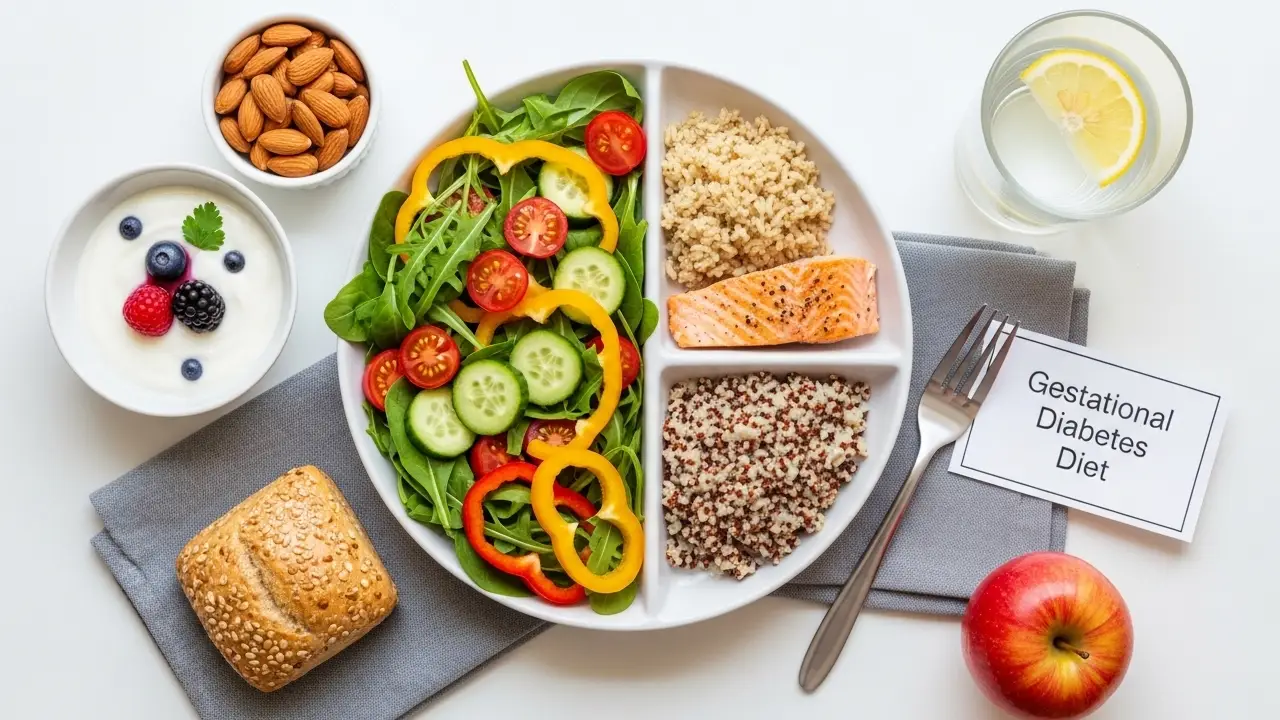
Healthy food options include:
- Whole grains like brown rice, oats, and whole wheat bread
- Lean proteins such as chicken, fish, eggs, and legumes
- Fresh vegetables, especially leafy greens
- Low-glycemic fruits like apples, berries, and pears
- Healthy fats from nuts, seeds, and olive oil
Foods to Avoid or Limit
Some foods can cause sudden spikes in blood sugar and should be limited or avoided.
These include:
- Refined sugar and sugary drinks
- White bread, white rice, and processed carbs
- Fried and fast foods
- Packaged snacks with high sugar content
- Sweet desserts and pastries
Ideal Meal Plan for Gestational Diabetes
Following a structured meal plan can help maintain consistent blood sugar levels throughout the day.
Sample daily meal plan:
- Breakfast: Whole grain toast with eggs and a small fruit
- Snack: Handful of nuts or yogurt
- Lunch: Grilled chicken salad with olive oil dressing
- Snack: Apple with peanut butter
- Dinner: Brown rice with vegetables and fish
- Evening Snack: A glass of milk or small protein snack
Carbohydrate Control and Portion Sizes
Carbohydrates directly affect blood sugar levels, so portion control is essential. Instead of avoiding carbs completely, focus on consuming the right type and amount.
Distribute carbohydrate intake evenly throughout the day. Pair carbs with protein or healthy fats to slow digestion and prevent spikes in blood sugar.
Importance of Regular Eating Schedule
Skipping meals can cause blood sugar levels to fluctuate. Eating smaller, frequent meals helps maintain stable glucose levels.
A consistent schedule also supports metabolism and prevents sudden hunger, which may lead to unhealthy food choices.
Hydration and Lifestyle Tips
Staying hydrated is just as important as diet. Water helps regulate blood sugar levels and supports overall health.
Additional tips include:
- Drink plenty of water throughout the day
- Engage in light physical activity like walking
- Monitor blood sugar levels regularly
- Consult a healthcare provider for personalized advice
Common Mistakes to Avoid
Managing gestational diabetes can be challenging, and some common mistakes can affect progress.
- Skipping meals or eating irregularly
- Overeating healthy foods without portion control
- Ignoring blood sugar monitoring
- Relying too much on processed “diabetic-friendly” foods
Being mindful of these habits can significantly improve outcomes.
Gestational Diabetes Diet Plan
| Category | Recommended | Avoid |
|---|---|---|
| Carbohydrates | Whole grains, oats | White bread, sugar |
| Proteins | Lean meat, eggs | Processed meats |
| Fruits | Apples, berries | Fruit juices |
| Fats | Nuts, olive oil | Fried foods |
Conclusion
A well-balanced gestational diabetes diet is essential for maintaining stable blood sugar levels and ensuring a healthy pregnancy. By focusing on whole foods, managing portions, and following a consistent eating routine, expectant mothers can effectively control their condition.
Always consult with a healthcare professional or dietitian for personalized guidance. Every pregnancy is different, and tailored advice ensures the best outcomes for both mother and baby.
FAQs About Gestational Diabetes Diet
1. Can I eat fruits with gestational diabetes?
Yes, but choose low-glycemic fruits like apples and berries and consume them in controlled portions.
2. How many meals should I eat daily?
It is recommended to eat 3 small meals and 2–3 snacks to maintain stable blood sugar levels.
3. Is sugar completely banned?
You should limit added sugar as much as possible, but natural sugars in whole foods can be consumed in moderation.
4. Can exercise help manage gestational diabetes?
Yes, light activities like walking can improve blood sugar control along with a proper diet.
5. Will gestational diabetes go away after pregnancy?
In most cases, it resolves after delivery, but regular monitoring is important as it increases the risk of type 2 diabetes later.