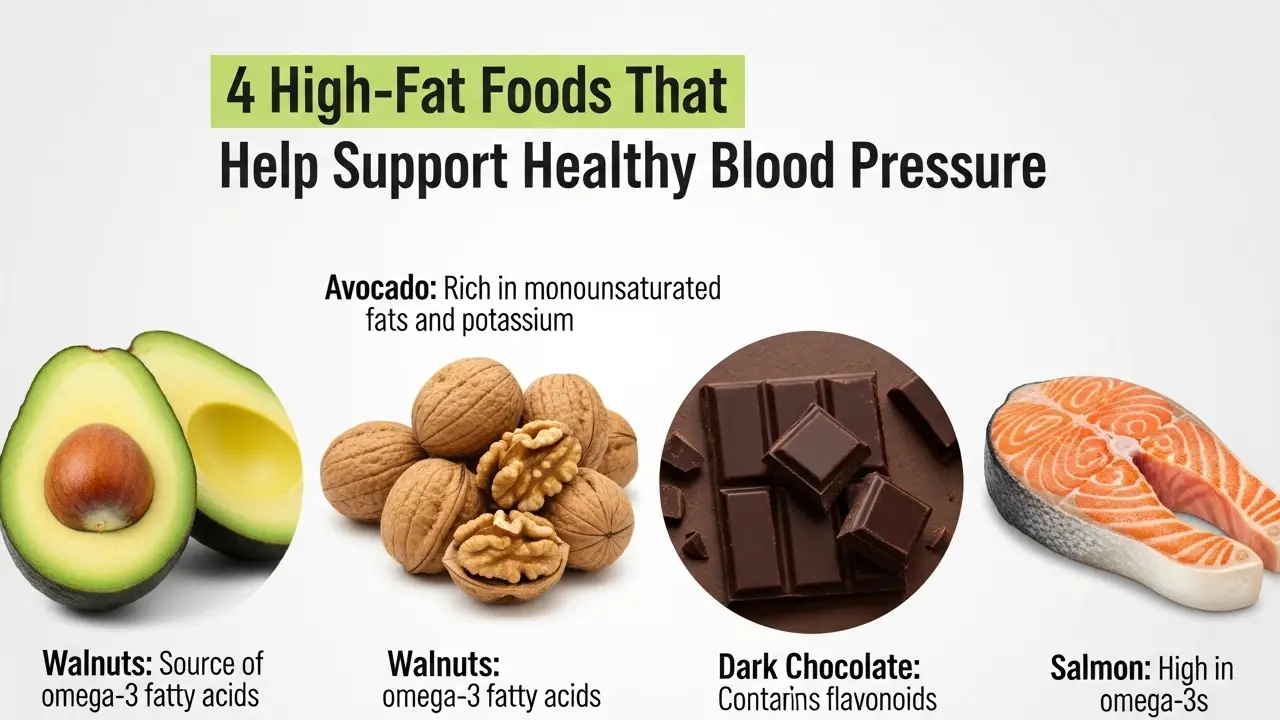
When people think about improving heart health and managing blood pressure, fat is often the first nutrient they try to avoid. However, not all fats are harmful. In fact, certain foods rich in healthy fats can play an important role in supporting cardiovascular health when included as part of a balanced diet.
Research continues to show that monounsaturated fats and polyunsaturated fats may help support healthy blood pressure levels by improving blood vessel function, reducing inflammation, and promoting overall heart health. While no single food can magically lower blood pressure, regularly choosing nutrient-dense foods rich in healthy fats can contribute to long-term wellness.
Here are four high-fat foods that nutrition and heart-health experts recommend incorporating into a blood pressure-friendly eating plan.
| Food | Key Healthy Fat | Additional Benefits |
|---|---|---|
| Fatty Fish | Omega-3 (EPA & DHA) | Supports heart health and circulation |
| Flaxseed | Omega-3 (ALA) | Rich in fiber and lignans |
| Walnuts | Plant-Based Omega-3 | Contains antioxidants and fiber |
| Extra-Virgin Olive Oil | Monounsaturated Fat | Rich in beneficial polyphenols |
Why Healthy Fats Matter for Blood Pressure
Blood pressure is influenced by many factors, including genetics, physical activity, sleep quality, stress levels, and dietary choices. While excessive consumption of saturated and trans fats can negatively impact heart health, healthy fats work differently inside the body.
Foods rich in unsaturated fats may help improve blood vessel flexibility, support healthy circulation, and reduce inflammation. These effects can contribute to maintaining healthy blood pressure levels over time when combined with other healthy lifestyle habits.
1. Fatty Fish: A Powerful Source of Heart-Healthy Omega-3s
Fatty fish such as salmon, sardines, trout, herring, mackerel, and tuna are among the best dietary sources of omega-3 fatty acids. These essential fats, known as EPA (eicosapentaenoic acid) and DHA (docosahexaenoic acid), have been widely studied for their cardiovascular benefits.
Omega-3 fatty acids may help support healthy blood vessel function and promote better circulation. They are also associated with reducing inflammation throughout the body, which is an important factor in maintaining cardiovascular health.
In addition to supporting blood pressure management, fatty fish provides high-quality protein, vitamin D, selenium, and other important nutrients that contribute to overall wellness.
Many heart health organizations recommend eating at least two servings of fatty fish per week as part of a balanced diet.
2. Flaxseed: A Small Seed Packed with Big Benefits
Flaxseed may be tiny, but it contains an impressive nutritional profile. It is one of the richest plant-based sources of alpha-linolenic acid (ALA), a type of omega-3 fatty acid.
Beyond healthy fats, flaxseed provides dietary fiber and plant compounds known as lignans. These compounds possess antioxidant properties that may help protect blood vessels from oxidative stress.
Adding flaxseed to smoothies, oatmeal, yogurt, or whole-grain baked goods is a simple way to increase nutrient intake. Ground flaxseed is often easier for the body to digest and absorb than whole flaxseed.
Its combination of fiber, healthy fats, and antioxidants makes flaxseed a valuable addition to a heart-conscious eating plan.
3. Walnuts: Nutrient-Dense and Heart Friendly
Walnuts stand out among nuts because they contain significant amounts of plant-based omega-3 fatty acids. They also provide fiber, magnesium, antioxidants, and beneficial plant compounds that support cardiovascular health.
Regular consumption of nuts has been associated with improved heart health markers, and walnuts are frequently highlighted for their unique nutrient profile.
Fiber found in walnuts can support overall wellness, while antioxidants help protect cells from damage caused by free radicals. Their healthy fat content may also contribute to maintaining normal blood vessel function.
Walnuts make a convenient snack and can easily be added to salads, oatmeal, yogurt, or homemade trail mixes.
4. Extra-Virgin Olive Oil: A Mediterranean Diet Staple
Extra-virgin olive oil is one of the cornerstones of the Mediterranean diet, a dietary pattern widely recognized for its heart-health benefits.
This oil is rich in monounsaturated fats, which may help support healthy cholesterol levels and cardiovascular function when used in place of less healthy fats.
Extra-virgin olive oil is also packed with naturally occurring polyphenols. These plant compounds have antioxidant properties that may help protect blood vessels and support healthy circulation.
Using olive oil in salad dressings, marinades, roasted vegetables, and everyday cooking is a practical way to incorporate healthy fats into meals.
Additional Lifestyle Tips for Managing Blood Pressure
Diet is only one piece of the blood pressure puzzle. Experts emphasize that long-term cardiovascular health depends on a combination of healthy habits.
Here are several evidence-based lifestyle strategies that may help support healthy blood pressure levels:
- Stay physically active through regular aerobic exercise and strength training.
- Maintain a healthy body weight through balanced nutrition and consistent activity.
- Reduce excess sodium intake by limiting heavily processed foods.
- Increase potassium-rich foods such as fruits, vegetables, beans, and potatoes.
- Get quality sleep each night to support cardiovascular and hormonal health.
- Manage stress levels through relaxation techniques, mindfulness, or physical activity.
- Limit excessive alcohol consumption and avoid tobacco products.
Foods That Pair Well with Healthy Fats
Healthy fats work best when combined with a nutrient-rich eating pattern. Consider pairing the foods above with:
- Leafy green vegetables
- Whole grains
- Fresh fruits
- Legumes and beans
- Low-fat dairy products
- Lean proteins
- Colorful vegetables rich in antioxidants
This combination can help create balanced meals that support overall cardiovascular health while providing essential vitamins and minerals.
Simple Meal Ideas Featuring These Blood Pressure-Friendly Foods
If you’re looking for easy ways to include healthy fats in your diet, try these meal ideas:
- Grilled salmon served with roasted vegetables and brown rice.
- Morning oatmeal topped with ground flaxseed and fresh berries.
- Mixed green salad with walnuts and olive oil dressing.
- Whole-grain toast drizzled with extra-virgin olive oil and sliced tomatoes.
- Greek yogurt topped with walnuts and fruit.
These simple options provide a variety of nutrients while helping you enjoy the benefits of healthy fats.
Frequently Asked Questions (FAQs)
1. Can eating healthy fats directly lower blood pressure?
Healthy fats may support cardiovascular health and blood vessel function, but they work best as part of an overall healthy lifestyle that includes balanced nutrition, physical activity, and proper sleep.
2. How often should I eat fatty fish?
Many health organizations recommend consuming at least two servings of fatty fish per week to support heart health.
3. Is olive oil better than butter for heart health?
Extra-virgin olive oil contains mostly monounsaturated fats and beneficial plant compounds, making it a popular choice in heart-healthy dietary patterns.
4. What is the best way to consume flaxseed?
Ground flaxseed is often preferred because it is easier to digest and can be mixed into oatmeal, smoothies, yogurt, and baked goods.
5. Are walnuts good for daily consumption?
Walnuts can be enjoyed daily in moderate portions as part of a balanced diet, providing healthy fats, fiber, and antioxidants.
Final Thoughts
Managing blood pressure does not require eliminating all dietary fats. In fact, certain high-fat foods contain nutrients that may support cardiovascular health when included in a balanced eating pattern.
Fatty fish, flaxseed, walnuts, and extra-virgin olive oil provide healthy unsaturated fats along with valuable nutrients such as fiber, antioxidants, and plant compounds. While no single food can guarantee lower blood pressure, making consistent, healthy dietary choices over time can contribute to better heart health and overall well-being.